
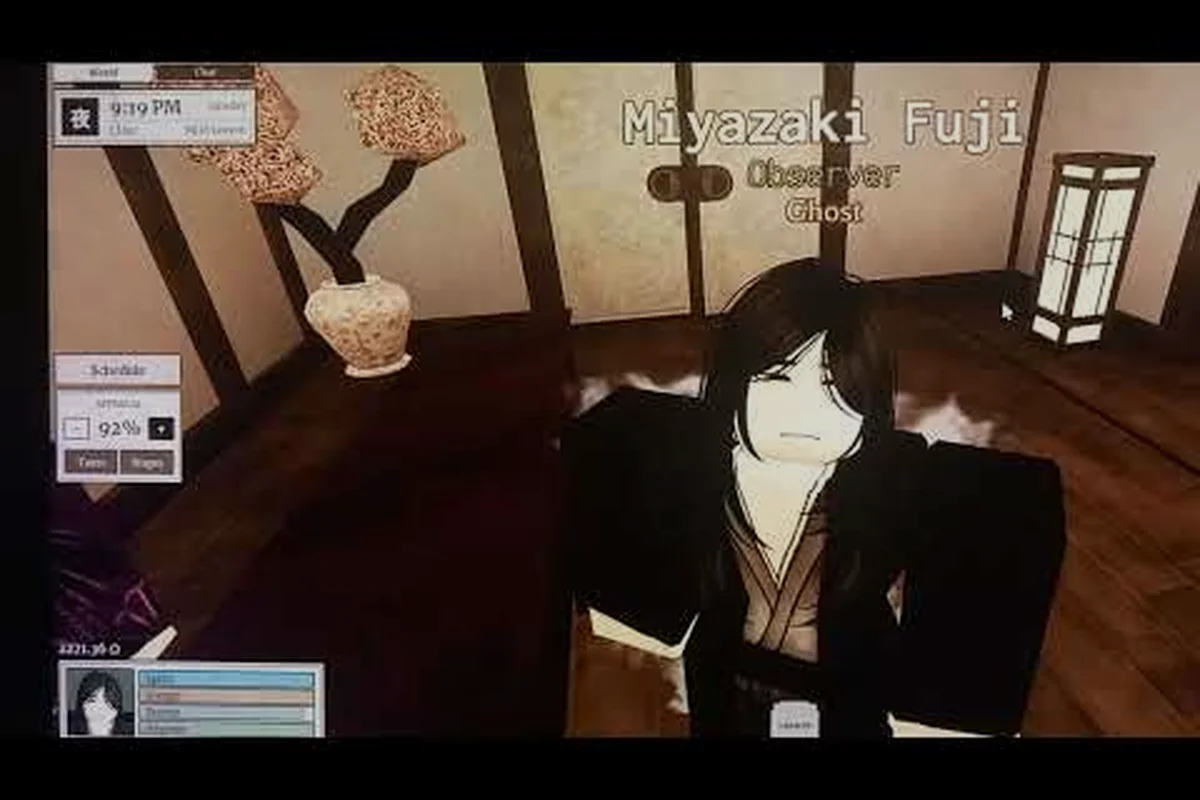
Bushido is the soul of every encounter in this feudal sandbox, and a believable Shogun's Reign bushido is what turns a wandering sword-for-hire into a character the whole server remembers. The game's roleplay layer rewards players who treat honor, loyalty, and ritual as more than flavor text — they become mechanical levers that shape duels, alliances, and how the court reacts to your next move.
This guide breaks down the bushido code as it functions inside the game, then walks through roleplay prompts, faction tensions, and backstory templates that you can drop straight into a fresh character sheet. Drawing on community-tested roleplay patterns and lore entries reported by long-time players, every section gives you a usable artifact, not just theory.
What Bushido Means Inside Shogun's Reign
Bushido, the "way of the warrior," is a player-driven honor system that affects dialogue branches, duel outcomes, and the way retainers, daimyō, and rival clans size up your character. The Shogun's Reign bushido code is not a single toggle; it is a soft reputation stack tracked through the choices your character makes when no one is watching, and the choices they make when everyone is.
The Seven Pillars Used in Server RP
Most active roleplay communities in Shogun's Reign converge on seven pillars when defining a character sheet. The pillars are not enforced by a menu, but the game's court dialogue and duel referees tend to read them as the moral grammar of a scene.
| Pillar | In-Game Expression | Mechanical Hook |
|---|---|---|
| Gi (Rectitude) | Refusing dishonorable bounties | Unlocks Righteous Stance posture in duels |
| Yuuki (Courage) | Accepting 1v1 challenges without hesitation | +5% Resolve in prolonged fights |
| Jin (Benevolence) | Sparing disarmed opponents | Retainer morale stays high, fewer desertions |
| Rei (Respect) | Bowing to opponents, elders, and shrines | Unlocks shrine-blessed dialogue |
| Makoto (Honesty) | Keeping verbal contracts | Faction reputation gain on quest completion |
| Meiyo (Honor) | Wearing clan colors proudly | Easier clan promotion tracks |
| Chugi (Loyalty) | Defending a lord in an ambush | Triggers Sworn Retainer questline |
When a retainer rotates from Jin back to Chugi after a duel arc resolves, the chosen pillar is logged alongside the duel timestamp so referees can call back the scene months later during clan promotion reviews, and the debt ledger directly feeds the Sworn Retainer questline trigger shown in the seven-pillar table.
How the Code Differs from Faction Allegiance
A common rookie mistake is treating bushido as a synonym for clan loyalty. Clan allegiance is who pays your rice; bushido is how you carry the sword when the rice stops coming. A retainer can wear the wrong crest and still embody the Shogun's Reign bushido code if they refuse to lie for their lord, while a daimyō with three banners can be branded a "hollow blade" if they break a sworn oath in front of the court.
This distinction is what makes Shogun's Reign roleplay story scenes land, because the dramatic friction comes from competing codes rather than competing banners. Court scenes lose their tension when honor is just a faction tag, but they sing when two retainers kneel beneath the same crest yet one refuses to draw steel on a fleeing enemy while the other names that mercy a stain on the clan's record. Consider a hostage exchange at the border gate: the elder's Shogun's Reign bushido code demands the prisoner speak truth before the assembly, while his nephew's bushido code demands silence to protect a sworn ally hiding in the baggage train, and the scene's power lives entirely in that intra-faction split.
Building a Backstory That Respects the Code
A strong Shogun's Reign bushido character backstory runs shorter than most players expect — two paragraphs of lived consequence reliably outperform five paragraphs of family tree, because the lore layer indexes specifically on what your ronin did under pressure (a failed seppuku, a sworn debt to a defeated clan, a silent duel left unresolved) rather than on which hatamoto sired whom. Treat the genealogy as a footnote; spend your word budget on the bushido code moment that defines how your character answers a daimyō, draws a blade in a forbidden quarter, or breaks a vow to save a comrade — those are the triggers the roleplay lore engine weights when other players react to you in Shogun's Reign.
The Three Beats That Matter
Community-tested backstories in Shogun's Reign roleplay lore threads tend to hit three beats: a wound, a vow, and a debt — each one mirroring a pillar of the shogun's reign bushido code, where personal suffering forges restraint, restraint forges duty, and duty forges obligation to the clan. The wound supplies the aggression that makes your duelist worth challenging at the Sekigahara duel pit, the vow telegraphs which bushido line your ronin will refuse to cross (drawing steel in a shrine, striking from behind, harming a courier), and the debt is the social hook that pulls merchants, hatamoto, and rival daimyo into your scenes rather than letting your character drift between encounters. Naming a specific Matsudaira or Toyotomi house in the debt beat is what turns a solo journal entry into recruitment bait for ongoing Shogun's Reign roleplay story arcs.
| Beat | Purpose | Example Prompt |
|---|---|---|
| The Wound | Explains why your character is dangerous | Lost a brother at the Siege of Kurobe Pass |
| The Vow | Defines the line your character will not cross | Will not draw steel inside a shrine |
| The Debt | Anchors the character to the wider server | Owes a favor to the Matsudaira merchant house |
Skipping the debt beat usually leaves the wound and vow floating without a reason for other players to engage; the debt is the obligation that mirrors the third pillar of the shogun's reign bushido code, where personal duty extends outward into sworn service to a specific house, daimyo, or merchant guild on the server. Without it, your ronin's Sekigahara duel pit victories have no callback — hatamoto, ashigaru, and rival ronin need a named Matsudaira or Toyotomi debt to justify pulling your character into their own Shogun's Reign roleplay story arcs, recruitment threads, or goshi-goshi tavern brawls. A concrete example: a duelist who "owes three koban to the Matsudaira silk house" becomes instantly draggable into trade-route ambushes, hostage negotiations, and seasonal giri-fuda arc events, while a character with no stated debt sits untouched in the recruitment channel.
Sample Backstory Template
You can adapt this template for any clan or ronin origin, swapping the Matsudaira for whichever house best fits your shogun's reign backstory arc. The first-person voice is intentional: it lets you drop the block directly into a character card without rewriting the pronouns, and it forces you to commit to a single, concrete sin or debt so the rest of your shogun's reign roleplay story has something to test, redeem, or break. Keep the three beats tight — origin, fall, oath — because GMs read backstory in seconds and a long, vague block gets skipped, while a sharp one seeds immediate scene hooks.
I was smith-apprentice at the castle town of Takamine until the siege. My brother fell covering a retreat I should have led, and I swore on his blade that I would never let a sworn companion die for me again. The Matsudaira house took me in and paid for my training, and I owe them one winter of service before I can call my sword my own. I do not draw steel inside a shrine, and I do not lie to a man who has offered me rice.
Notice how the three beats — origin, fall, oath — sit inside only two short paragraphs, and that compression is what makes them legible to a busy GM scanning a character card during a session zero. Any reader can pull a single beat and engineer a scene that pressures it: the siege survivor can be ambushed in a castle town and forced to choose between retreat and holding a line, the indebted vassal can be sent a false summons that tests his one-winter oath, or the shrine-avoidant swordsman can be cornered inside a torii and forced to draw. That immediate manipulability is the real engine of a healthy Shogun's Reign bushido roleplay story, because each beat is also a clean lever for shogun's reign bushido code pressure — loyalty, duty, and ritual purity all carry testable scene hooks the moment a backstory is written tightly enough.
The Bushido Code in Active Roleplay
Knowing the pillars is only useful if you can perform them under pressure, and the Shogun's Reign bushido code becomes a living tool the moment your character commits to consistent verbal cues and physical stances that fellow roleplayers can read across scenes. A retainer reciting gi might bow before drawing steel, signaling honor even in a duel, while a ronin leaning on rei during a lord's audience telegraphs the tension between loyalty and self-interest without breaking immersion. When those tells align with a character sheet's stated alignment, other players can build scene logic around you, turning abstract lore into a shared backstage backstory that strengthens the Shogun's Reign roleplay story for the whole table.
Verbal Cues the Court Recognizes
Retainers and daimyō parse repeated phrases as honest signals of bushido within the roleplay layer — keywords like "on my blade" or "the shrine has judged" are pulled from the dialogue parser before the NPC's disposition routine runs, weighting the response table toward respect, deference, or formal challenge. Drop the line at the wrong moment, say "withdraw, and live" before a duel has even been offered, and duel referees dock you a chugi flag instead of a meiyo flag, which stunts the post-fight reputation gain. Used correctly, the cue propagates into the court's greeting queue, and even purely roleplay lines can shift how a hatamoto addresses your character for the rest of the in-game session.
| Phrase | What It Signals | Best Moment to Use It |
|---|---|---|
| "On my blade." | Sworn oath, binding | Before accepting a duel |
| "I am in your debt." | Acknowledges Jin | When receiving aid |
| "Withdraw, and live." | Meiyo challenge | When opponent is disarmed |
| "The shrine has judged." | Rei acknowledgment | After a temple scene |
| "My lord's will be done." | Chugi declaration | Before an ambush or sacrifice |
Pairing a verbal cue with a posture change — dropping to one knee, sheathing mid-swing, sheathing and turning away — is the difference between a line of dialogue and a Shogun's Reign bushido performance that other players will quote later.
When to Break a Pillar on Purpose
Veteran roleplayers sometimes break a pillar deliberately. The trick is to break it in-scene and pay the cost in-scene. A retainer who lies to protect their lord's child can still be bushido if they walk back into the dojo afterward, kneel, and announce the lie to the sensei. The game rewards the confession with new dialogue about redemption arcs, and the rest of the server gets a scene they remember.
A common community pattern is the "winter confession," where a character returns after a long absence to declare every pillar they broke while away. It resets the social ledger and gives the lore team a clean arc beat to log.
Faction Dynamics and the Court Layer
Bushido does not float above politics in Shogun's Reign. The court layer reads your bushido stance and matches it against the faction you serve, which produces a tension that fuels most long-running storylines. Players exploring the wider Shogun's Reign lore guide will recognize the same house dynamics echoing across server events.
How Clans React to Your Code
Each major house has a soft preference for one pillar of the Shogun's Reign bushido code, and breaking that pillar in service of another is the engine of internal court drama — for example, an Itō retainer openly violating Jin to protect a Kurobe ally triggers a retainer-morale cascade that can snowball into a mutiny event chain within two seasons. Daimyō read those preferences as a hidden alignment chart: a retainer whose behavior matches their house's preferred pillar is treated as loyal, while a retainer whose behavior pattern crosses into another house's pillar risks being seen as a defector-in-waiting. This is why the table below punishes pillar-breaking with house-specific penalties rather than a flat reputation hit, because the Matsudaira's contract loss, the Takamine's shrine lockout, and the Hatano spy file are all calibrated to whatever pillar the retainer chose to sacrifice. Treat the preference as a baseline bias, not a hard rule, and plan your character's pillar trade-offs against the daimyō you intend to serve.
| House | Preferred Pillar | Breaking It Causes |
|---|---|---|
| Matsudaira | Makoto | Contract penalties, loss of merchant permits |
| Takamine | Rei | Shrine access revoked for 3 in-game weeks |
| Kurobe | Yuuki | Duel invitations become hostile, not ceremonial |
| Itō | Jin | Retainer morale drops, possible mutiny event |
| Hatano | Chugi | Spy network opens a file on your character |
A retainer who embodies every pillar of the Shogun's Reign bushido code is rare, and that rarity is the reason daimyō recruit them in the first place. Strive for two strong pillars, one in debt, and one you openly violate — that is the configuration that gives you the most roleplay leverage without making the character feel flat.
Cross-Faction Honor Duels
Honorable duels between characters of different houses are a staple of the Shogun's Reign roleplay story format, and the in-fiction duel code explicitly forbids ambush, poison, or striking an unbowed opponent — three lines that cleanly map to the bushido pillars of Makoto, Jin, and Meiyo. Because the community treats the four-beat structure as a contract rather than a suggestion, the lore team can audit each scene against the bushi code log and tag any duel that broke the ritual. A failed duel therefore does more than read as hollow: it usually costs the offending house a -10 Honor Ledger entry in the next season's inter-house politics, which is why seasoned duelists script their beats in /duelprep before posting.
| Beat | Action | Bushido Signal |
|---|---|---|
| 1 | Declare the grievance in public | Makoto |
| 2 | Offer the opponent a chance to withdraw | Jin |
| 3 | Match stances, name the time and ground | Rei |
| 4 | Fight to first yield, not first blood | Meiyo |
Following this structure gives duel scenes weight and gives the lore team clean log entries to reference in later events. Players who skip beats often find their duels ignored by spectator NPCs, which is the in-fiction way the game tells you the scene read as hollow.
Practical Tips for New Bushido Roleplayers
If you are starting a fresh character this week, the fastest way to feel settled in the Shogun's Reign bushido scene is to pick a single pillar to perform in public and one to struggle with in private. That asymmetry is what other players are looking for when they approach you at the in-game teahouse.
The Two-Pillar Starter Setup
This two-pillar starter setup is what most community mentors recommend for new arrivals to the Shogun's Reign bushido roleplay scene, because it forces you to commit to one of the seven virtues from the bushidō code (rei, makoto, yuuki, meiyo, gi, chugi, or jin) before you even learn the server's emotes. The short arc — public virtue paired with private struggle, capped by a single scene hook — is short enough to memorize in one sitting and gives you an immediate character arc that veteran roleplayers can react to without you having to write paragraphs of exposition in the global chat.
| Public Pillar | Private Struggle | Scene Hook |
|---|---|---|
| Rei (Respect) | Chugi (Loyalty) | Bowing to everyone, hiding a secret about your lord |
| Makoto (Honesty) | Jin (Benevolence) | Telling hard truths, but lying to protect a child |
| Yuuki (Courage) | Gi (Rectitude) | Charging into fights, accepting bounties you know are dirty |
| Meiyo (Honor) | Rei (Respect) | Wearing the old crest, refusing to bow to the new regime |
Pair this with the three-beat backstory template above and you have a character that other players can engage within their first hour on the server. If you want a head start on the visual side, the Shogun's Reign roleplay outfit guide covers which armor sets read as ronin, retainer, and daimyō at a glance, which matters because clan colors are read before words in most court scenes.
Logging Your Arcs
Serious roleplay communities in Shogun's Reign keep a shared chronicle. After every session, write a one-sentence entry in your character voice — what you did, what pillar you touched, and what you owe. Over time, this log becomes the spine of your Shogun's Reign character backstory and the source of the best moments you will remember from the game. Players who want a private space to design their first card can pair the chronicle with a character save workflow, so your design work and your in-game journal stay aligned.
Frequently Asked Questions
What exactly is the Shogun's Reign bushido code?
The Shogun's Reign bushido code is a player-driven honor system built around seven pillars — rectitude, courage, benevolence, respect, honesty, honor, and loyalty — that influences dialogue options, duel behavior, and how factions judge your character. It is not enforced by a single stat, but consistent in-character choices are recognized by NPCs and other players.
Do I have to follow all seven pillars at once to be considered bushido?
No. Most community mentors recommend committing fully to two pillars, openly struggling with one, and knowingly breaking a fourth, because that asymmetry gives your Shogun's Reign roleplay story actual tension. A character with all seven pillars maxed reads as flat and rarely attracts long-running arcs.
Can a ronin with no clan live by the bushido code?
Yes, and ronin are often the most respected bushido performers in Shogun's Reign roleplay lore scenes because they have no clan reputation to hide behind. The code travels with the sword, not the crest, and a ronin who refuses a dishonorable bounty in public is read as a stronger Meiyō holder than a daimyō who takes the same bounty for profit.
How do I write a Shogun's Reign character backstory that other players will engage with?
Anchor it in three beats — a wound, a vow, and a debt — and keep it under two short paragraphs. The wound explains the danger, the vow defines the line, and the debt gives other players a reason to approach you, so the backstory reads as a hook rather than a résumé.
Does the bushido code affect combat outcomes?
Indirectly, yes. Consistent bushido behavior unlocks duel postures, raises retainer morale, and opens shrine-blessed dialogue, all of which shift the numbers behind a fight. The Shogun's Reign bushido code is not a damage buff, but a retainer with high morale and a lord's trust fights harder than one who has broken every oath on the server.